
Pargasite
No longer aluminotschermakite

Life in the USA is not normal. It feels pointless and trivial to be talking about small looks at the fascinating natural world when the country is being dismantled. But these posts will continue, as a statement of resistance. I hope you continue to enjoy and learn from them. Stand Up For Science!
Pargasite is probably not a very familiar mineral, but it is one of the earliest named amphiboles whose name is still a valid mineral. Geology students learn about amphiboles, a large group of minerals, but with a few exceptions we don’t often pay too much attention to the specific species because without detailed analysis (sometimes both chemical and crystallographic), it’s impossible to tell one from another. Most of them tend to be dark green, brown, or black.
The amphibole supergroup of minerals has at least 31 “root name groups,” which are related minerals that with revised nomenclature all have the same starting-point name, “enhanced” with chemical modifiers together with some others based on historical usage. Consequently within the “obertiite root name group” you end up with specific minerals like potassic-mangano-mangani-ungarettiite along with six other defined minerals in that group alone.
Yeah, “potassic-mangano-mangani-ungarettiite” is a real mineral name (albeit not yet fully approved), and yes, all this makes even me, who loves jargon (up to a point), crazy, and it’s also why we usually just say “it’s an amphibole” if it is some dark hard mineral (all silicates) with clear-cut cleavage (the way it breaks) at about 120 degrees, which distinguishes amphiboles from the pyroxenes, similar dark minerals except that they have cleavage at about 90 degrees. A name like potassic-mangano-mangani-ungarettiite makes you just want to spit out the formula, KNa2(Mn2+2Mn3+3)Si8O22O2.
MinDat, the online mineral database, lists at least 161 specific amphibole minerals. There are continuous and discontinuous series among most of them – chemical variations, so that one mineral that might be a 100% sodium-iron silicate would transition (in different specimens) with increasing magnesium and decreasing iron to another mineral at 100% sodium-magnesium; halfway between them you’d have a mineral that’s 50% iron and 50% magnesium. But sometimes four or more elements may vary in those series, so it gets complicated.
The most familiar amphibole names are probably hornblende, tremolite, and actinolite, but pargasite is probably pretty common even though not often identified; it is NaCa2(Mg4Al)(Si6Al2)O22(OH)2, sodium-calcium magnesium aluminosilicate, so there’s nothing especially weird in there.
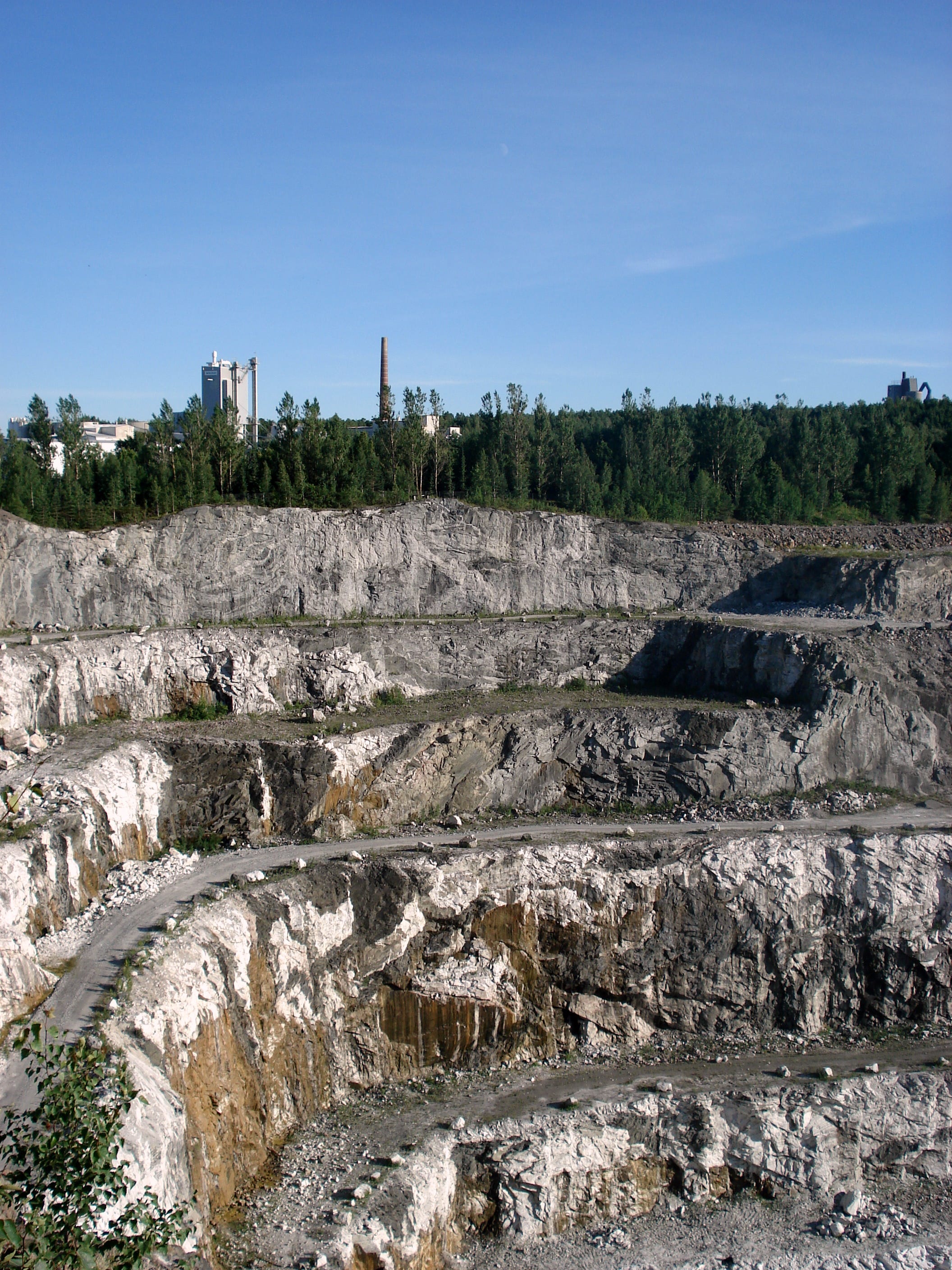
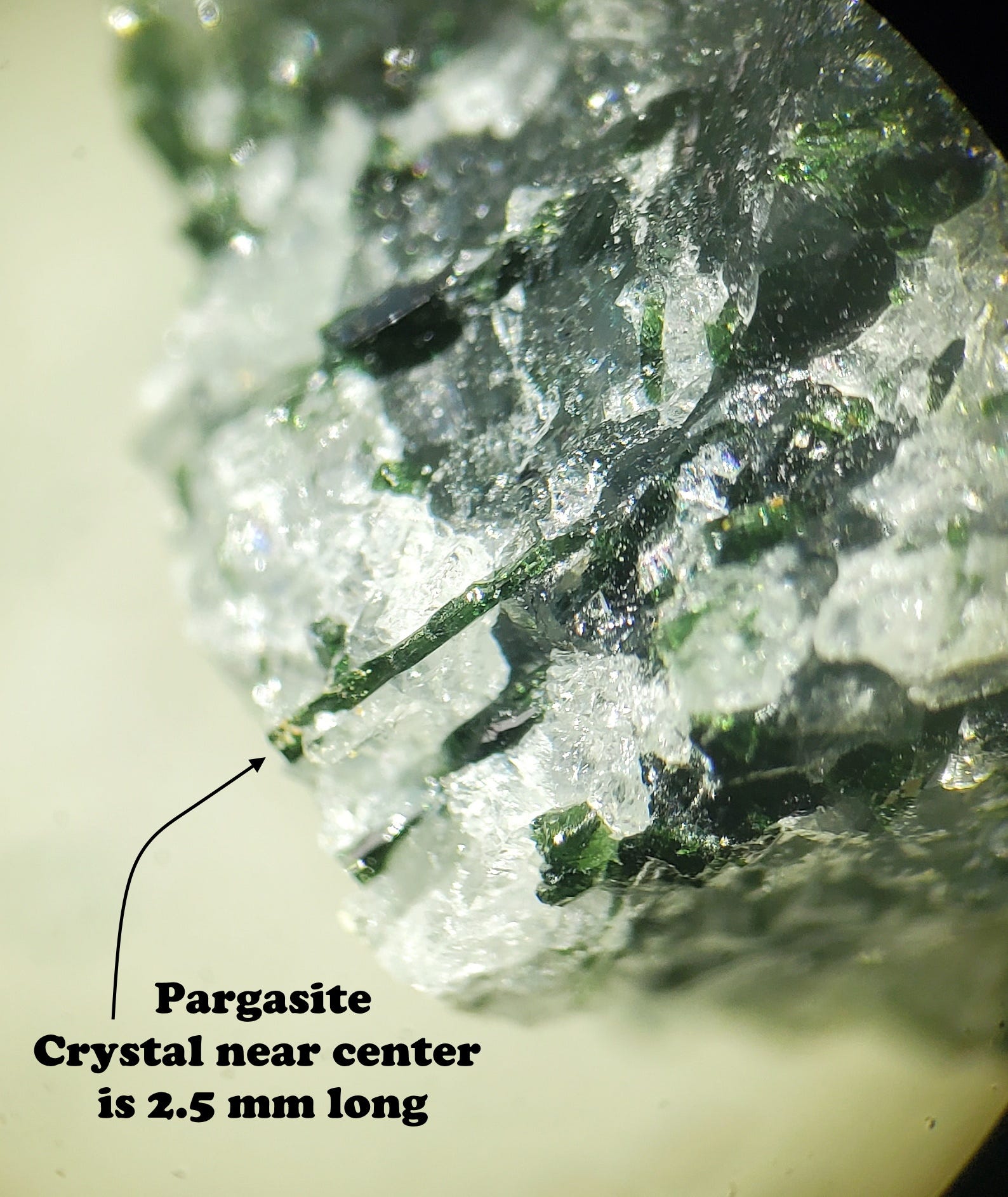
Pargasite was named in 1814 by Count Fabian Gotthard von Steinheil (a German born in Estonia who was a Russian military officer and Governor-General of Finland) for the Pargas Valley, Finland, and despite many wholesale changes in nomenclature, it’s still a legitimate mineral today. It’s often the nice dark green color you see here in the little crystals of my specimen from Longido, Tanzania, but sometimes it’s brown or black and without analysis it would be impossible to tell that it’s pargasite and not hornblende, or magnesio-fluoro-hastingsite, or 60 other minerals defined by the details of their chemical makeup (and not their appearance).
If you want some more jargon complication, when I got it my specimen of pargasite was labeled aluminotschermakite. But when the amphiboles were re-defined in 2012, the name aluminotschermakite lost out and was abandoned, and all examples of aluminotschermakite are now either tschermakite, ferri-tschermakite, or ferro-tschermakite. Furthermore, careful analysis of amphibole specimens from Longido, Tanzania, shows that none of them are even in the tschermakite group, but rather are pargasite. I knew you wanted to know those details.
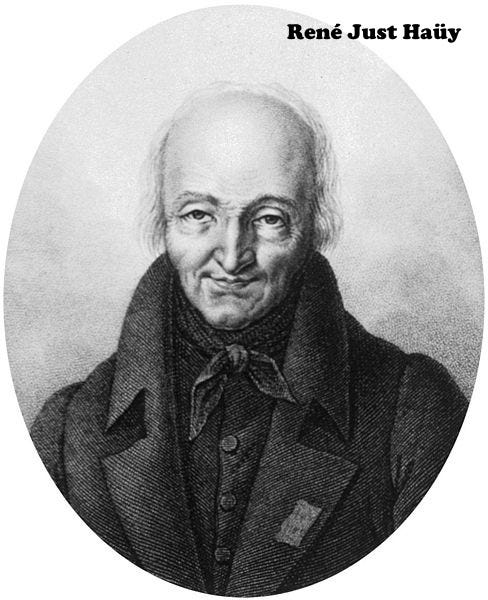
The word amphibole is from Greek ‘amphibolos’ for ‘ambiguous’, named by the early French mineralogist René Just Haüy (1743-1822) for the group’s vast diversity that he recognized even in 1801. The tschermakite minerals honor Austrian mineralogist Gustav Tschermak von Sessenegg (1836-1927).
Amazing that all the reading about rocks I've done in maybe 20 years, I dont remember ever hearing amphibole is from "ambiguous." Cool.
But since I've realised their complexity, im ambivalent
Some days these just make me smile. Not understand, you know, but it's worth a smile.