
Selenium
Light sensitive

Life in the USA is not normal. It feels pointless and trivial to be talking about small looks at the fascinating natural world when the country is being dismantled. But these posts will continue, as a statement of resistance. I hope you continue to enjoy and learn from them. Stand Up For Science!
Selenium isn’t an element we think about often, although it’s important in several aspects of modern life. And if things had worked out a little differently, it might have been one of the most important elements we use.
Selenium was discovered in 1817 by chemists Jöns Jacob Berzelius and Johan Gottlieb Gahn who also owned a plant to produce sulfuric acid at Gripsholm, Sweden. They thought a red precipitate, a byproduct of processing pyrite for the sulfuric acid, was a tellurium compound, but eventually discovered a new element they named selenium, for Selene, Greek goddess of the moon, by analogy with tellurium, named from Latin tellus, Earth.

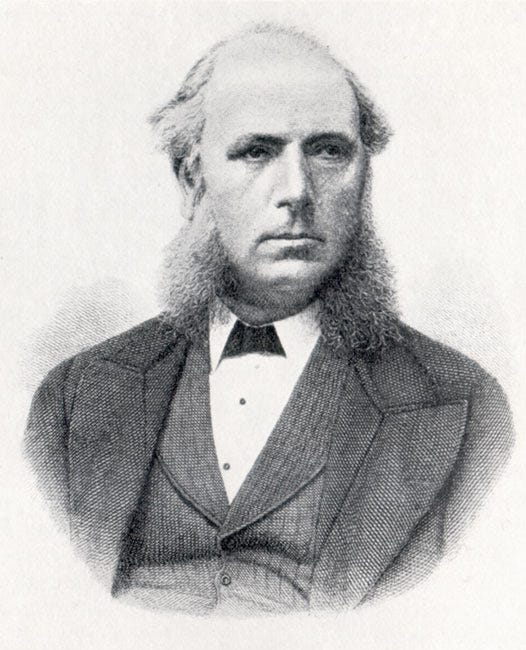
But it wasn’t until 1873 that Willoughby Smith (1828-1891), working on electrical properties of materials for the company that made undersea cables for telegraphy, discovered selenium’s sensitivity to light. I recounted his story in What Things Are Made Of (p. 177-178), but once his accidental discovery that selenium’s electrical properties depended strongly on light was confirmed, all sorts of technologies opened up.
Astronomers Joel Stebbins and Jacob Kunz at the University of Illinois used selenium compounds to image the faint light of distant stars in the early 1920s. And in 1920, A.O. Rankine published a note in Nature (Feb. 5, 1920) titled Telephony by Light. He showed that a “selenium valve” could be controlled by light, and fluctuations in light produced by the vibrations of a diaphragm by sound could be transmitted in a light beam to a selenium receiver and converted back into sound. He recognized that Alexander Graham Bell had invented a photophone in 1880, successfully transmitting sound using a light beam over 200 yards.
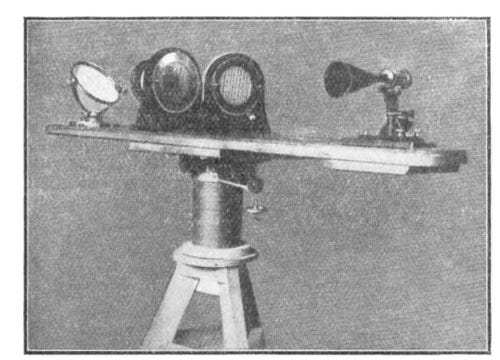
Rankine’s apparatus used six-inch lenses and he reported that “the articulation of the speech heard [was] extraordinarily perfect” over a distance of 8 miles. He felt that the range was limited only by sight distance, ultimately the curvature of the earth – and of course this was long before lasers or satellites. Nonetheless, obviously photophones didn’t catch on, at least not those using selenium, and Bell’s telephone based on the electrical properties of a magnet moving in proportion to sound waves came to dominate the industry.
Historic and traditional uses for selenium included decolorizing glass, an application that still commands about 20% of selenium consumption. The greatest use (40%) of selenium is in processing manganese and some other metallurgical work, making electrolytic production less consumptive of electric power.
Historically, photovoltaic selenium compounds were used in camera light meters and standard photocopiers. In 1995 in the US, about a third of the selenium went to photocopiers, but by 2000 it was near zero as more efficient organic-silica compounds were developed. The same is probably true of electric-eye doors that formerly used selenium-based materials. Copper-indium-gallium-diselenide (CIGS) is still used in solar cells. With other electronic uses this adds up to about 10% of selenium consumption.
Selenium is a vital component in human and animal health, although it can concentrate deleteriously in the environment. Its use in fertilizer and livestock feed amounts to about 20% of the total globally. It can also be found in anti-dandruff shampoos.
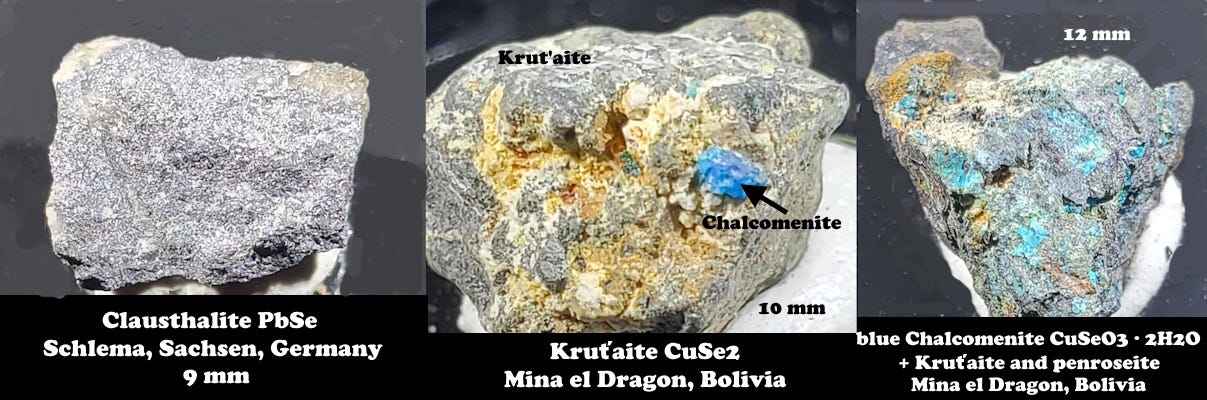
Selenium is rarely concentrated in specific minerals, although there are some. My micromount examples in the top photo are definitely not in the category of “spectacular” in appearance.
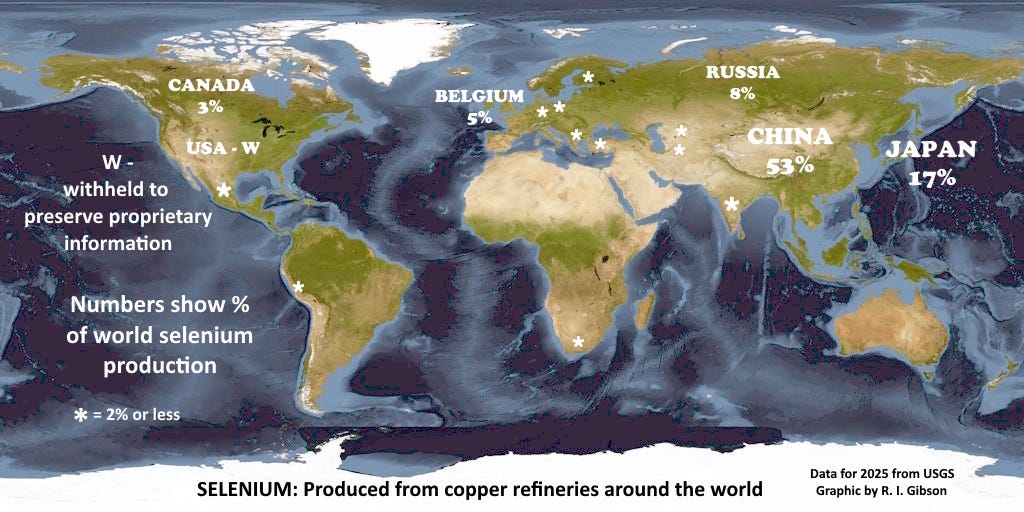
Virtually all selenium (and tellurium) is a by-product of electrolytic refining of copper, so its production is strongly dependent on the copper industry worldwide. In the 1990s refineries in Japan and Belgium yielded more than 50% and 13% respectively of world selenium, but in 2025 the unsurprising leader is China at 53%, reflecting both their copper refinery production (48% of the world) and position as the world’s leading copper consumer. But Japan is still in second place, at 17%. Other leaders include Russia (8%), Belgium (5%), and Canada (3%). Production statistics from two US refineries (in Texas and Utah) are withheld to preserve proprietary data, but the US is probably close to 90% (or more) dependent on selenium imports, from South Korea, Philippines, Mexico, Chile, China, Poland, and elsewhere.